Here's what's happening.
Event announcements, book cover images, new arrivals, and informational posts. Useful to existing followers, but not always magnetic to people who haven't discovered the shop.

Come for a book.
Leave with a new obsession.
An independent bookstore concept inspired by Victoria. Where booksellers have opinions, readers have personalities, and an ordinary browse can change your whole weekend.
 Concept campaign / independently created
A great bookstore isn't a list of books. It's the feeling that someone inside knows exactly what you'll love next.
Our working proposition →Many independent bookshops have real personality, brilliant taste and exciting events. Yet promotional feeds can reduce all of that to notices, new releases and schedules.
Event announcements, book cover images, new arrivals, and informational posts. Useful to existing followers, but not always magnetic to people who haven't discovered the shop.
Booksellers whose opinions you trust. Stories you cannot stop thinking about. People whose reading habits are a little too relatable. A place worth visiting just to see what you find.
Books as cultural taste, personal expression, and an invitation into an interesting world.
Real reactions, unfiltered opinions, and books that send the group chat into chaos.
The surprise of finding a story you would never have searched for online.
We combined the cultural attraction of a beautiful bookshop with friendly, opinionated booksellers and the spontaneous humour of readers who care just a little too much.
The fictional brand uses bold cobalt, coral and butter yellow, but leaves room for candid photography, unposed people and real literary conversation. Consistency doesn't require stamping the logo on every book.
"Tell us the last five-star book you read. We have thoughts."
Local inspiration is anonymized. This is a fictional and independently created transformation, not a critique commissioned by a real store.
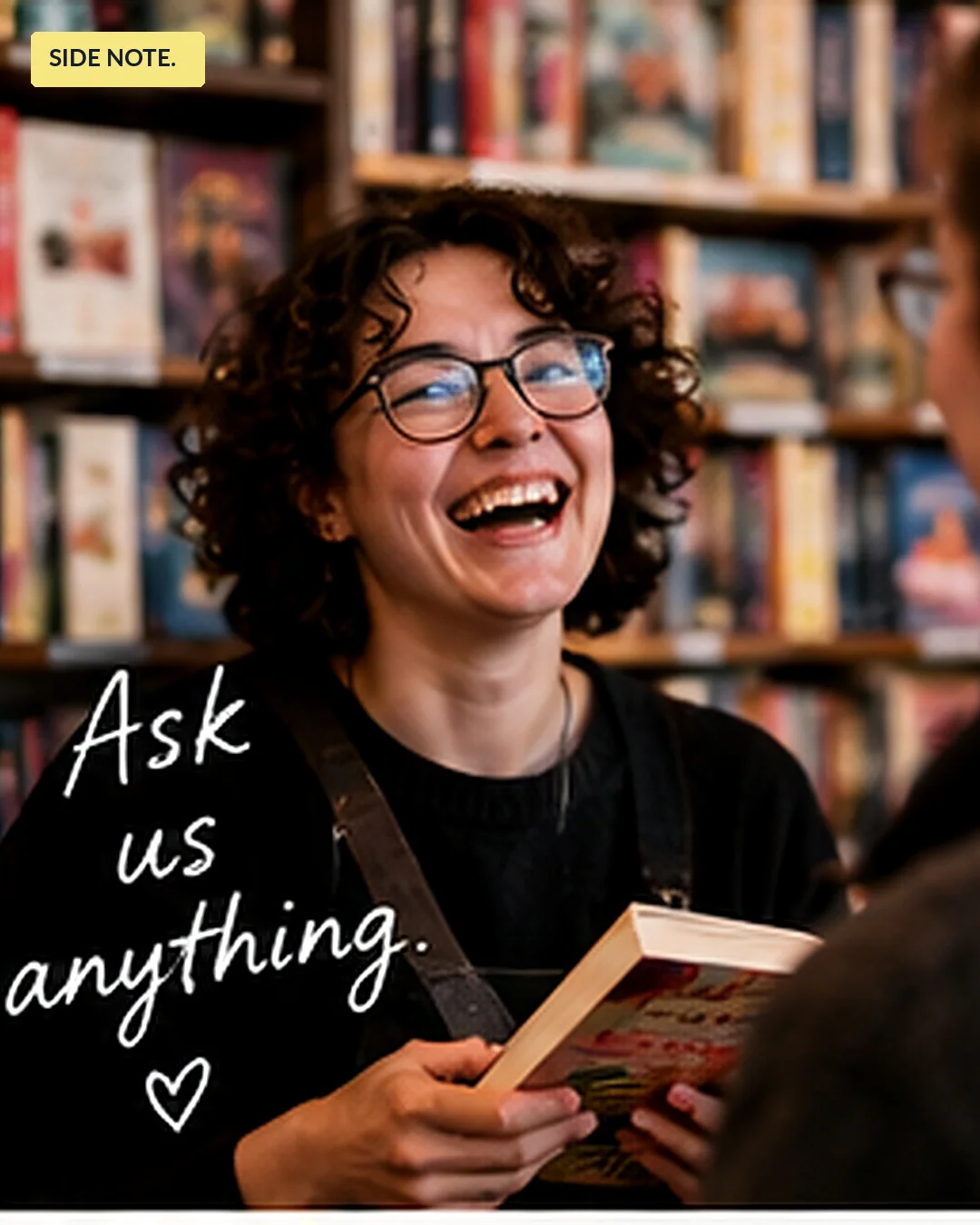
A nine-post feed that earns attention through strong opinions, unusual discoveries, and a good dose of reader humour. Tap any post to inspect it.

Show the argument people will have afterward, the friends they'll bring, and why they cannot wait to be there.
We don't start with a catalogue. We start with escape, chaos, a full emotional spiral, or something a reader can't yet name.
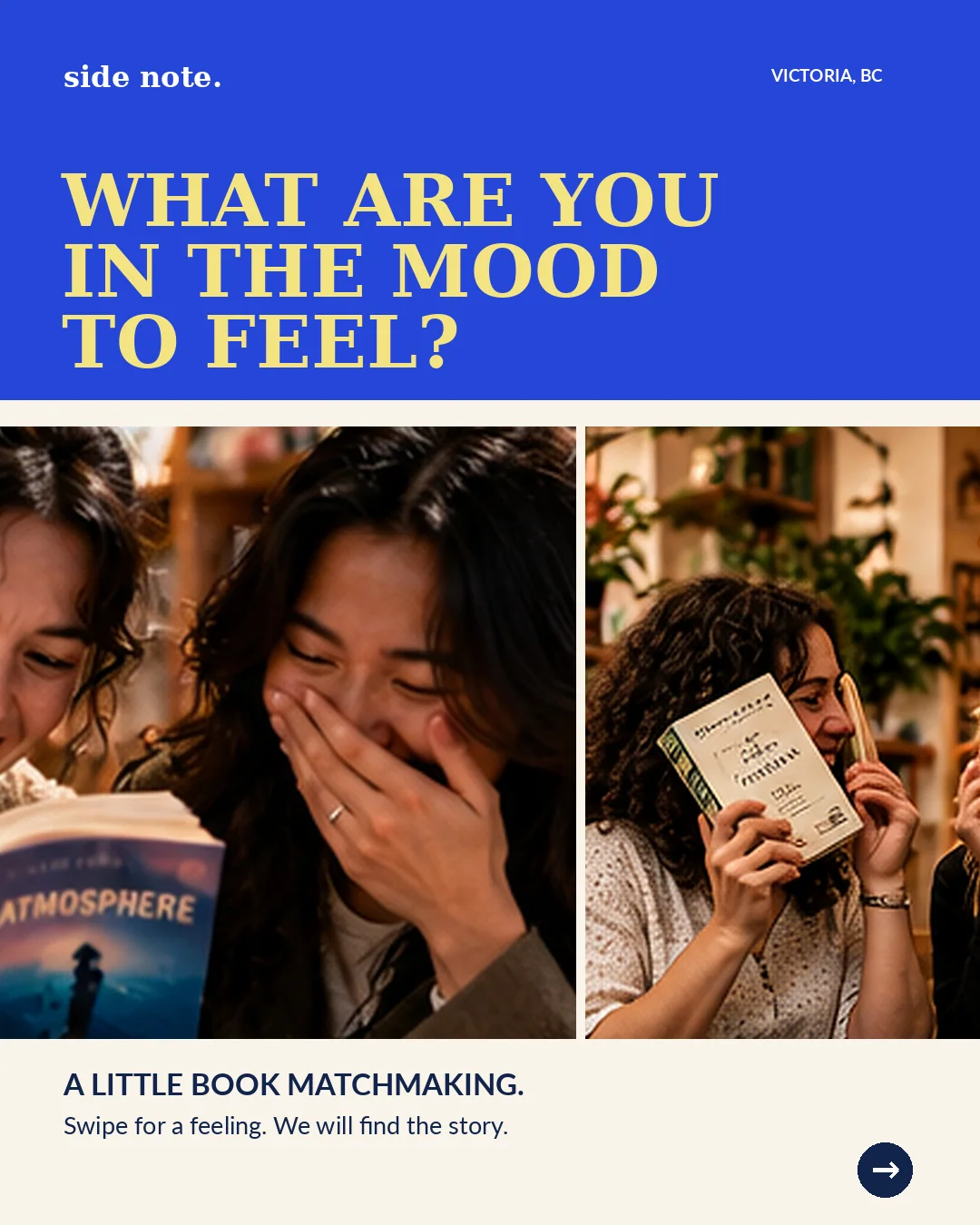
Two four-frame sequences show an opinionated bookseller and an accidental bookshop detour. The stickers are design mockups, not live polls or messages.

Meet the people who make the recommendations. Humour and strong opinions are the hook, not an obligation to buy.
The Story prompts encourage responses. Real execution would need staff review, consent for filming, and properly configured Instagram stickers.
This is where the content becomes commercially useful. The interaction matches curiosity with bookseller judgment and supports a relevant, low-friction next step.
A Reel or Story gets a reader curious.
They mention a favourite book or a reading mood.
A specific published title with a reason.
Show visit interest or request an inventory check.
All nine screens represent the fictional experience. Inquiries are not sent, inventory is not confirmed, and actions are not purchases.
This isn't a static screenshot. Start from a Reel or Story, make your choices, discover a recommendation and explore the next steps for visiting or asking about a book.
Someone sees a Reel, gets curious about a book and ends up speaking with a bookseller who understands their taste. This is what happens when a shop has more to offer than a list of new arrivals.
01. Discover the shop
Begin with the kind of bookstore content people actually want to engage with.
Illustrative portfolio demonstration. Side Note is fictional. The Instagram-like screens are simulations and do not connect to an Instagram account, store inventory, a real person, or checkout.
A four-week illustrative framework demonstrating how Tita would separate attention, reading interest, customer action, and verified revenue if connected systems were available.
Important: The 44 store information views are a separate signal and may overlap with inquiries. None of these numbers are real, and no verified sales, visit counts, ROI or attributed revenue are claimed.
What we'd test next: Which bookseller format leads to qualified recommendations, how to connect inquiries to confirmed stock, and how store sales might be verified through POS or commerce reporting.
The original concept strategy and reporting framework are available as standalone PDFs. Together with the interactive page, they show how Tita approaches discovery and acquisition as a connected system.