BEFORE / FICTIONAL STARTING POINT
Look what we have.
Product displays, isolated pieces and stock announcements. Useful information, but customers still need to picture themselves wearing the clothes.

A fictional contemporary clothing boutique. A complete example of how social content can make clothes feel part of a life, and make it easier for someone to take the next step.
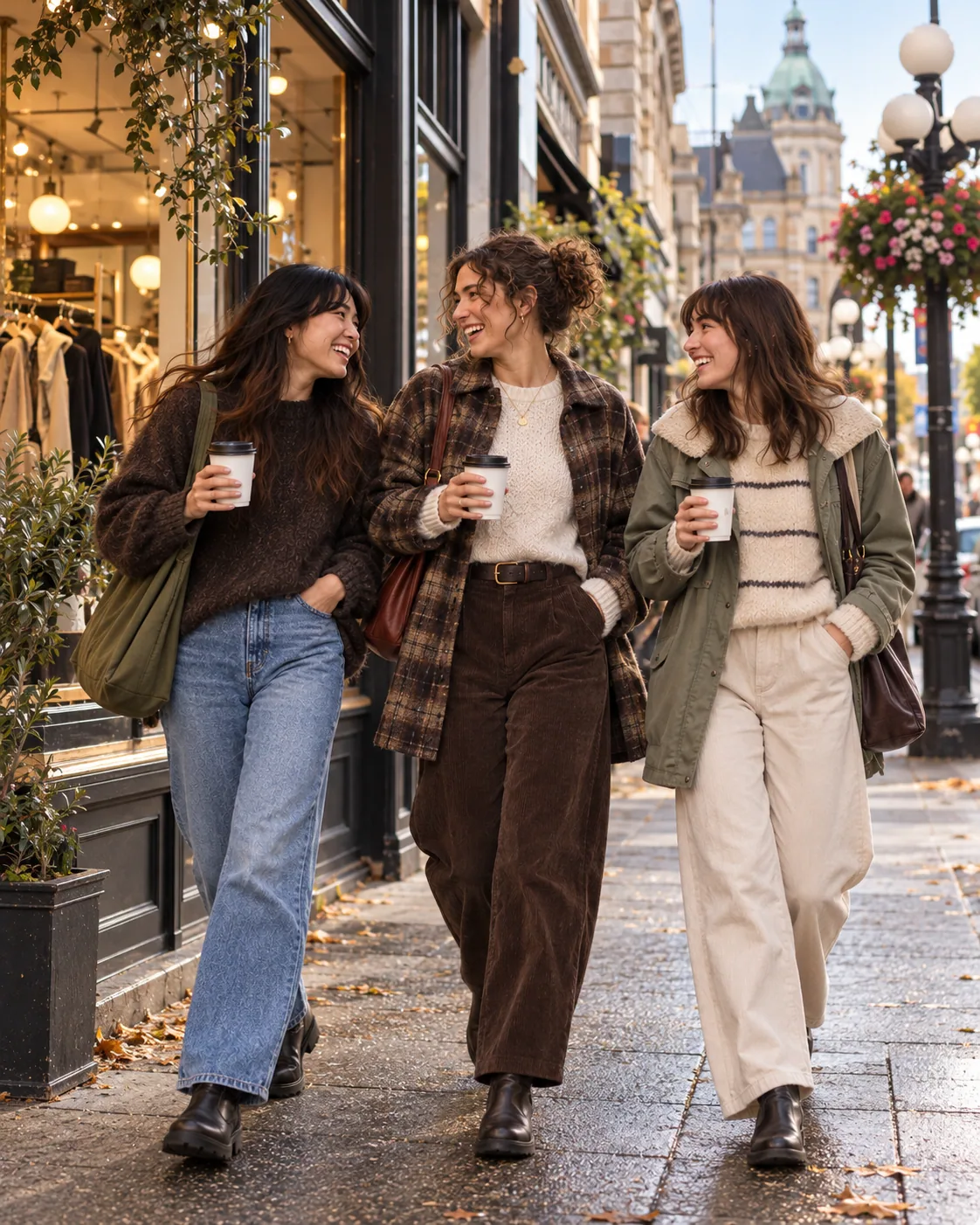
A well-curated boutique can show beautiful garments all day and still leave customers doing the imaginative work themselves. We wanted to show what happens when the pieces become part of the story.
In our fictional starting point, the account primarily documents inventory and arrivals. The proposed transformation makes styling, personality, shared moments and spontaneous boutique discovery more visible. It is not a critique of a named Victoria business.
Product displays, isolated pieces and stock announcements. Useful information, but customers still need to picture themselves wearing the clothes.
Friends, actual plans, trying things on, relatable styling and a natural way to ask about the piece that caught someone's attention.
There's coffee with a friend, a Saturday without a plan, getting ready for lunch or finding something that feels unexpectedly right. The garment has more meaning when people can imagine the life around it.
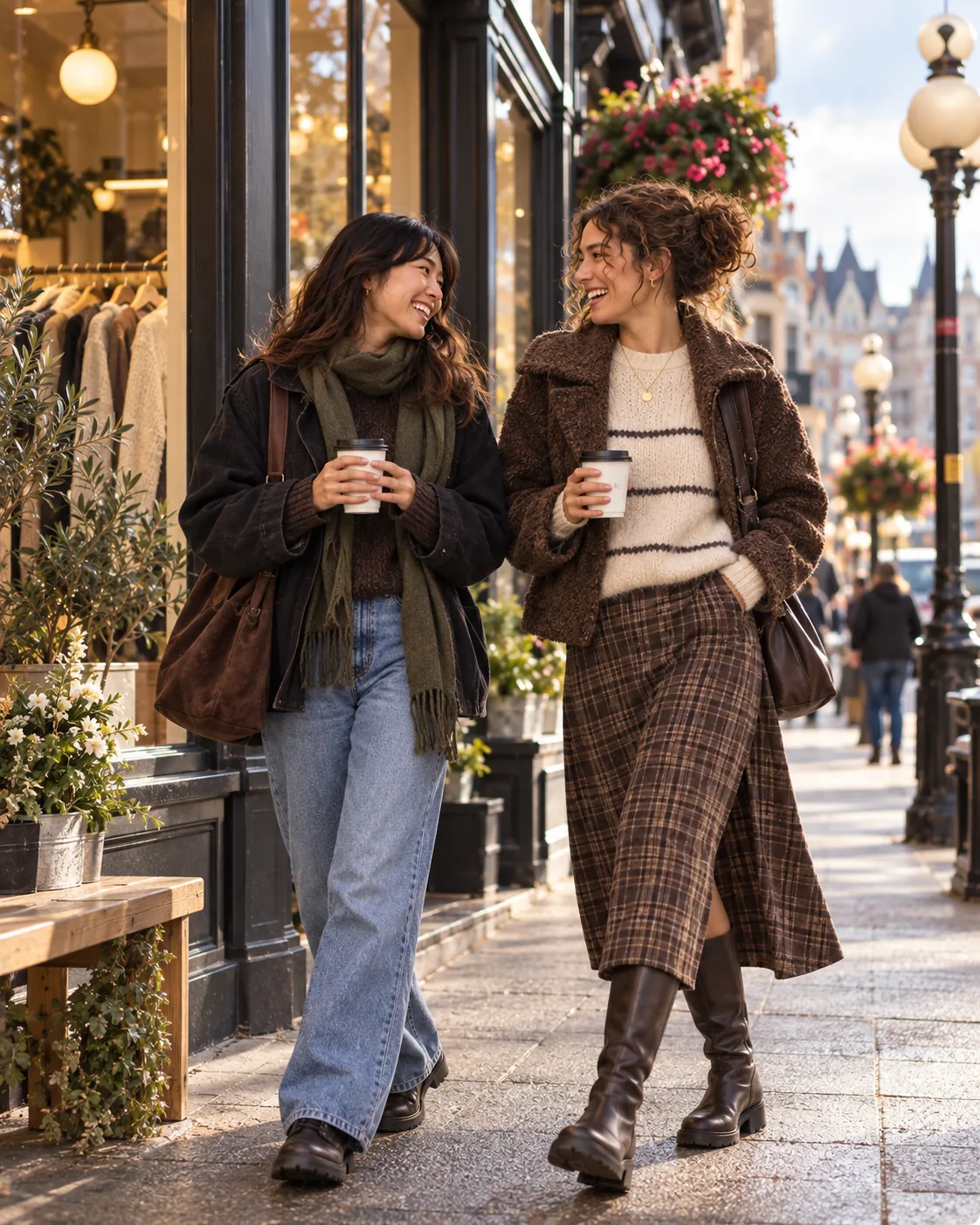
Show people genuinely enjoying an outfit and the occasion, without posing every moment as a campaign.
Make browsing, fitting rooms and the people inside the shop feel worth experiencing.
When a piece catches someone's eye, move from curiosity to useful product details and a possible store visit.
Victoria styling, not aspirational fashion that ignores where the customer actually lives. Denim, textured knits, practical layers, boots and personal details. The people should feel like friends, not mannequins.
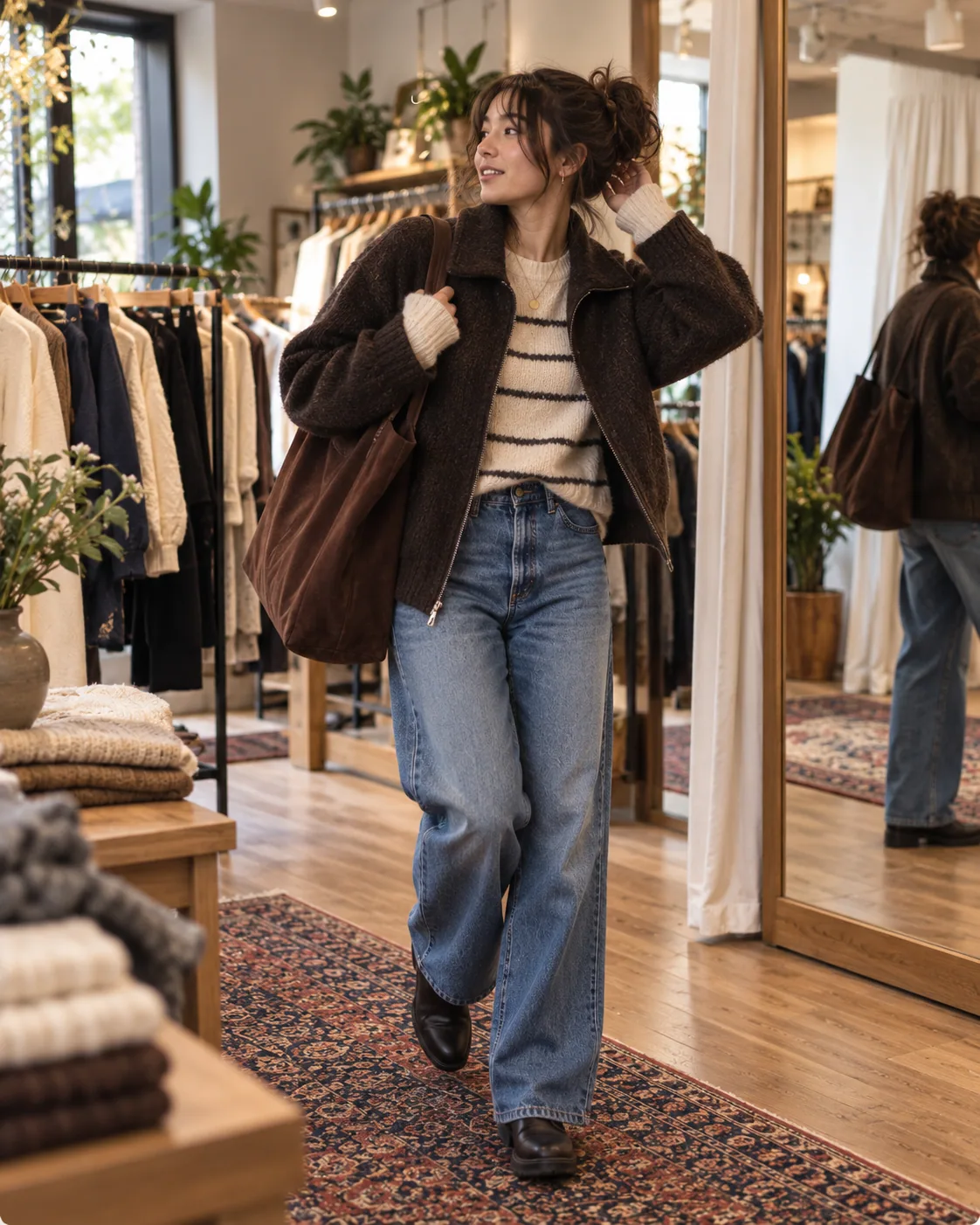
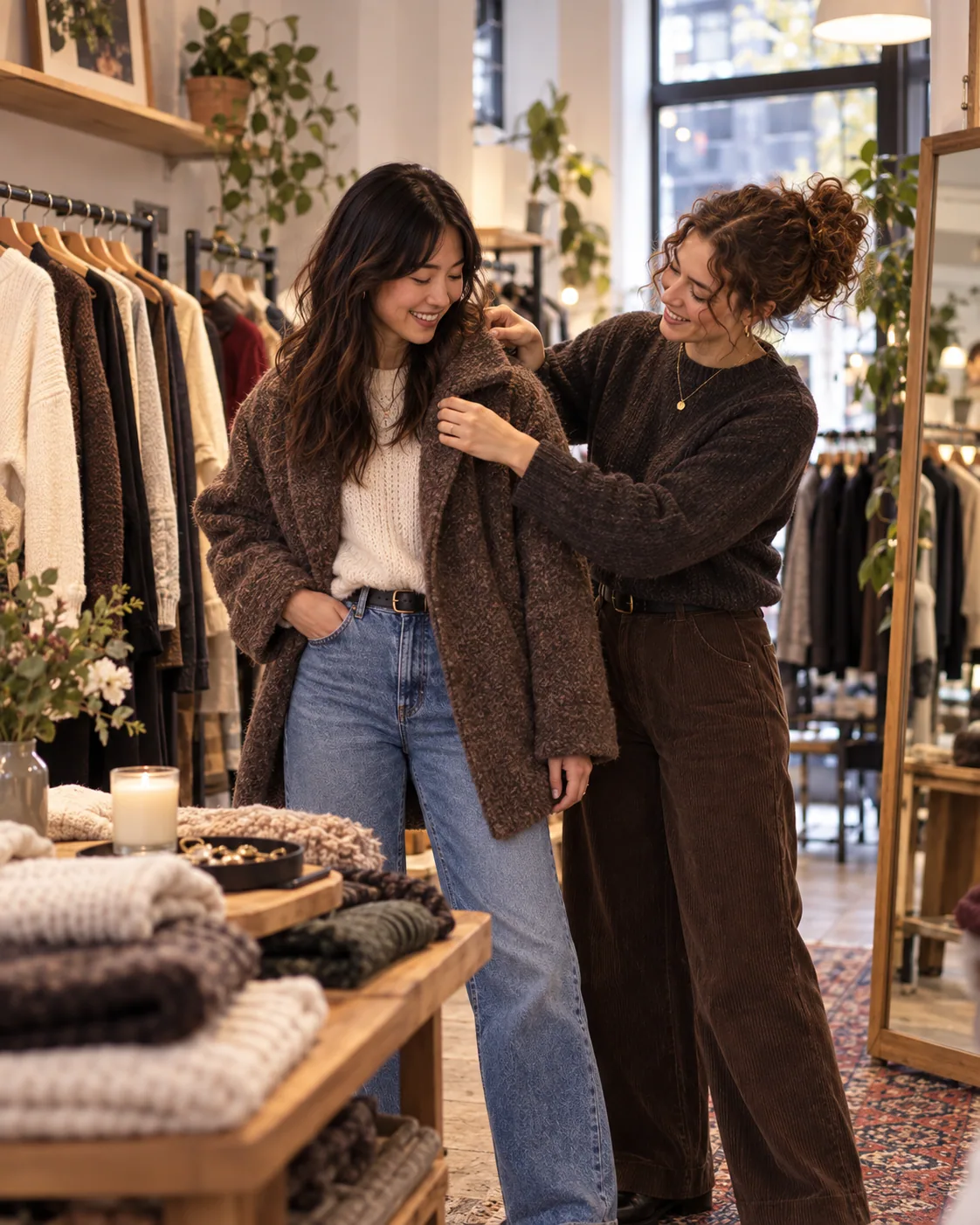
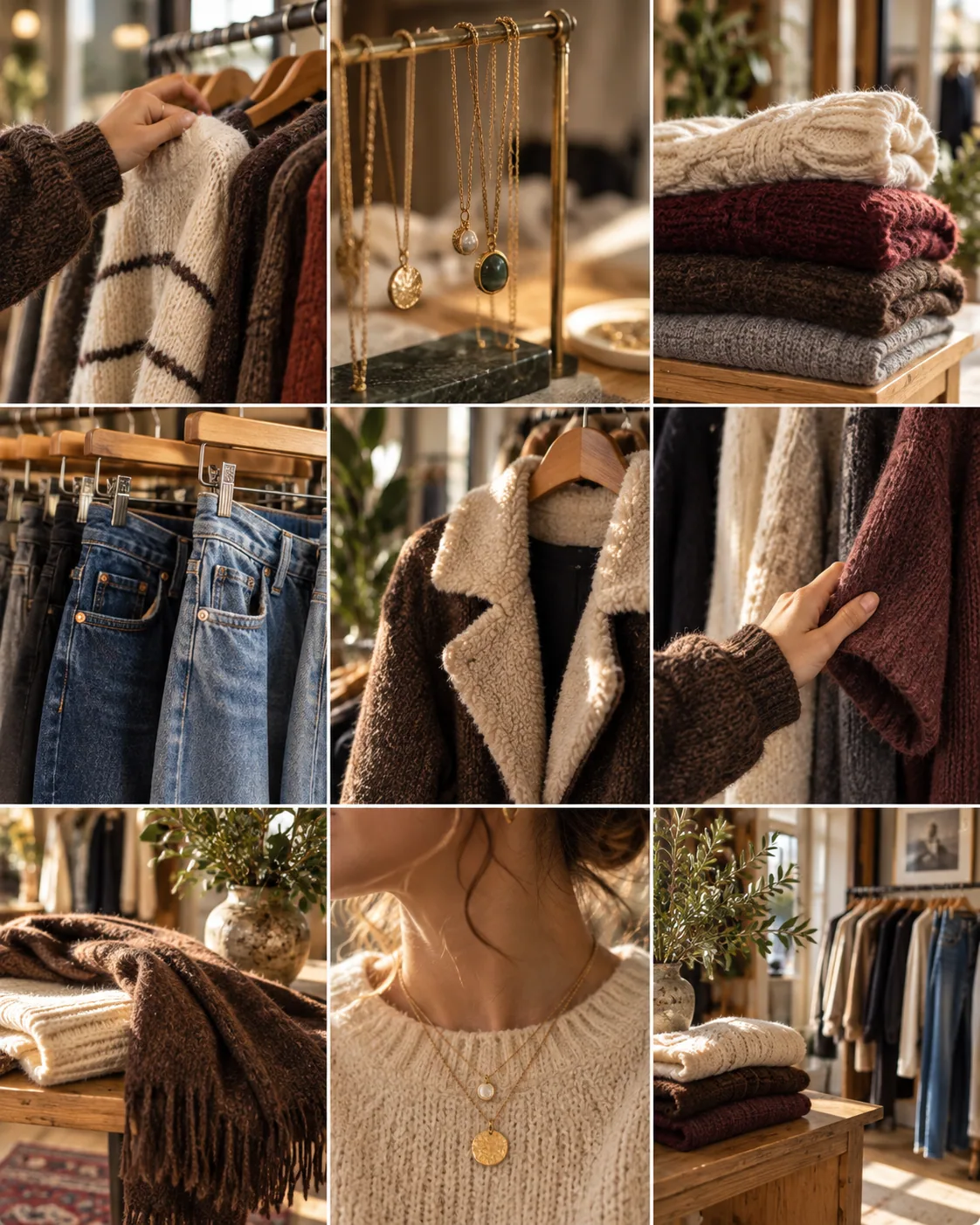
Less styling lecture, more “oh, I'd wear that.” One garment becomes part of three different days.
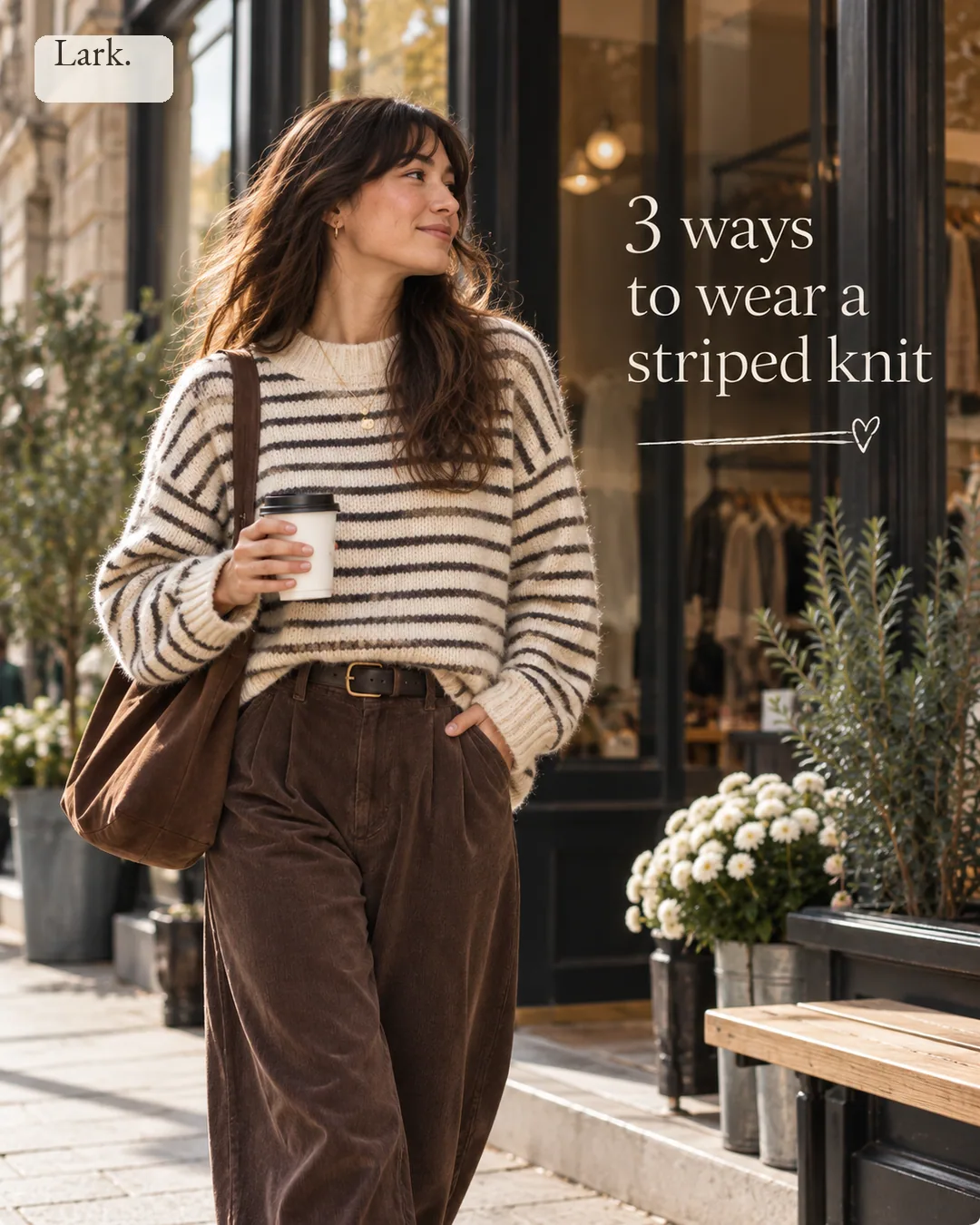
Stories should feel like visiting the shop with someone you like. A friend, a fitting room, a spontaneous vote and an outfit that catches your eye.
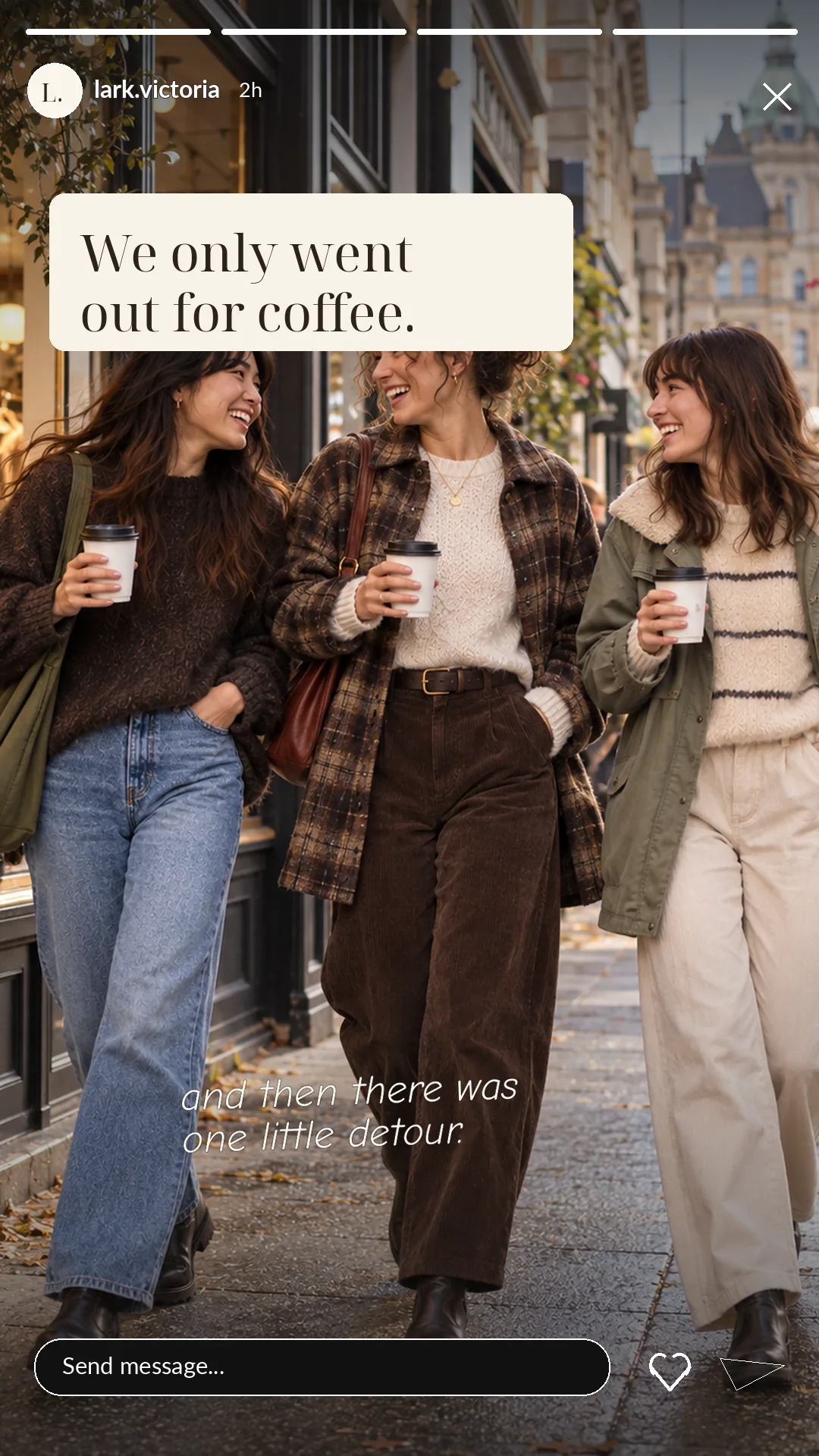
The first is mostly about the experience of browsing and trying things on. The second moves from outfit inspiration to the kind of size or colour question a real customer might ask.
Story polls and reply boxes are visual concepts, not functioning Instagram stickers.
A customer asks about a knit. The response should be helpful: show the looks, capture preferences, hand availability questions to a person and make the boutique easy to find. Browse the eight visual steps, then try the complete clickable conversation below.
This is the full clickable concept, not a video or a screenshot. Start from a Story or feed post, explore the shopping conversation, and see what the interactions can and cannot tell us.
Try the fictional Lark. Victoria social-to-shopping journey. Explore how a Story, a friendly product inquiry and a useful next step can turn fashion inspiration into genuine store interest.
A fictional four-week example of how Tita would measure social discovery and shopping interest. None of these figures is actual Lark, Tita or real-boutique performance.
| Illustrative metric | Week 1 | Week 2 | Week 3 | Week 4 | Total |
|---|---|---|---|---|---|
| Local reach | 3,900 | 4,450 | 4,900 | 5,350 | 18,600 |
| Profile visits | 190 | 225 | 240 | 265 | 920 |
| Product-page visits | 71 | 96 | 125 | 148 | 440 |
| Qualified product DMs | 12 | 17 | 22 | 27 | 78 |
| Store directions taps | 11 | 15 | 16 | 22 | 64 |
| Product-link clicks | 8 | 10 | 12 | 16 | 46 |
These are different signals, not unique people passing sequentially through one funnel. Directions taps don't verify store visits; a product inquiry doesn't verify a sale; completed purchases require retail data access.
Compare qualified interest from everyday outfit moments, Stories and product-first content, not just reach.
Reply usefully to sizing questions and have staff confirm inventory before making availability promises.
Make location, hours and item identification easy to find. Don't turn every inquiry into a form.
Connect ecommerce events or permissioned POS data before claiming social-driven sales.
They buy what it means to them. Lark shows how a boutique can create desire, give people a reason to visit and make interest easier to act on.
Independent fictional concept informed by the character of Victoria's local retail scene. Images and people are illustrative. No client relationship, sales outcomes or actual testimonials are claimed.